

Summary
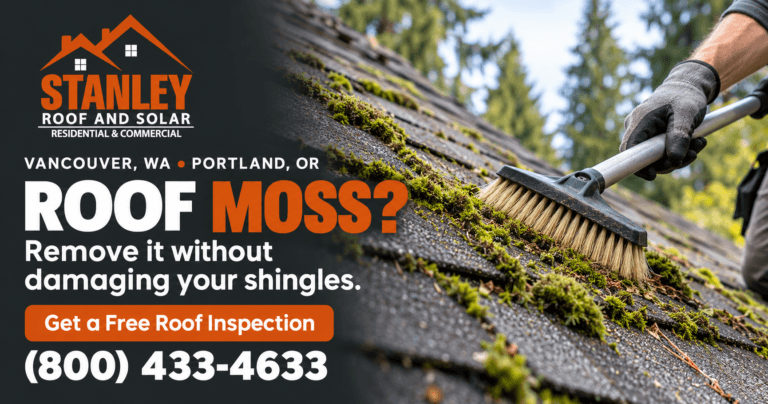
The safest way to remove moss from a roof is to brush it off gently from the top down with a soft-bristle brush, treat what’s left with a moss killer, and then let more sunlight reach the roof so the moss doesn’t come back. Pressure washing is the most common mistake. It can strip the granules that protect asphalt shingles and shorten the roof’s life.
Key Takeaways
- Moss holds moisture against the roof and can lift shingle edges so water gets underneath, according to Oregon State University Extension.
- Brush moss off downward, in the direction the shingles overlap. Never scrape upward and never pressure wash.
- Oregon State University lists zinc sulfate and soap-based potassium salts of fatty acids as moss treatments. Zinc sulfate corrodes copper, so skip it if you have copper gutters or flashing.
- Trimming trees for more sunlight is the most effective long-term fix. Zinc or copper strips at the ridge help slow regrowth.
- Vancouver averages about 42 inches of rain over roughly 163 wet days a year, which is why moss returns faster here than in most of the country.
- Steep, two-story, or older roofs are safer left to a roofing crew. Stanley Roof and Solar includes moss treatment in every roof maintenance visit.
Moss is so common on Pacific Northwest roofs that many homeowners stop noticing it. But a green roof is a wet roof, and moisture is what wears shingles out in our climate. This guide covers how to remove moss without causing new damage, how to keep it from coming back, and when it makes more sense to have a crew handle it. It’s the same advice we give homeowners during roof maintenance visits across Vancouver, Clark County, and the Portland metro.
Why Moss Grows So Fast on Vancouver and Portland Roofs
Moss needs shade and steady moisture, and our region supplies both. NOAA’s 1991–2020 climate normals put Vancouver, WA at about 42 inches of rain spread over roughly 163 wet days a year. Most of it falls as light, steady rain between October and May, so a roof can stay damp for weeks at a time.
Tree cover makes it worse. In Clark County, communities like Hazel Dell, Felida, and Salmon Creek just north of Vancouver have mature Douglas firs and bigleaf maples that shade roofs all day and drop needles and leaves that hold water. Wooded lots around Camas and Battle Ground see the same thing. South of the river, homes in the West Hills next to Forest Park in Portland and on the tree-lined streets of Lake Oswego fight moss every year. North-facing slopes get the least sun and almost always grow moss first.
Does Moss Actually Damage a Roof?
Yes, though not the way most people think. Oregon State University Extension explains that moss doesn’t eat into roofing material directly. The damage comes from what it does around the shingles:
- It holds water. Moss acts like a sponge, keeping the shingle surface wet long after the rest of the roof has dried.
- It traps debris. Soil, needles, and leaves collect in the moss and hold even more moisture.
- It lifts shingles. As moss grows under shingle edges, it can break the seal and let water reach the layers below, which is how many slow leaks start. If you’re already seeing stains inside, see our guide to roof leak repair. Left alone for years, moss is one of the main reasons roofs here fall short of their rated life, as we cover in how long a roof lasts in the Pacific Northwest.
How to Remove Moss From a Roof, Step by Step
- Pick a dry, mild day. A wet, mossy roof is extremely slippery. Wear shoes with strong traction. Oregon State University advises extending your ladder at least 3 feet above the roofline and using a safety line on steep roofs or where the eaves are higher than 16 feet.
- Protect your plants. Cover shrubs and flower beds below the roofline with plastic, or soak them with water first, so treatment runoff doesn’t harm them.
- Brush the moss off downward. Use a soft-bristle brush or broom on a long handle and work from the ridge toward the gutter, with the overlap of the shingles. Brushing upward pries shingles loose.
- Treat what’s left. Oregon State University lists two options: zinc sulfate mixed with water in a pump sprayer, or a soap-based product made from potassium salts of fatty acids, which is noncorrosive and low-risk for people and pets. The Asphalt Roofing Manufacturers Association also recommends a 50:50 mix of laundry-strength liquid chlorine bleach and water for moss and algae on asphalt shingles. Follow the product label either way.
- Rinse gently, if the product calls for it. Use a garden hose at normal pressure, spraying downward.
- Clear the debris. Remove dead moss, needles, and leaves from the roof, valleys, and gutters so they don’t hold moisture against the roof again.
Moss Removal Mistakes That Damage Roofs
| Method | Why to Avoid It | Better Option |
|---|---|---|
| Pressure washing | Strips the protective granules from asphalt shingles and can force water under them | Soft-bristle brush plus a moss treatment |
| Scraping with metal tools | Gouges shingles and breaks the seal between them | Brush downward with the shingle overlap |
| Scrubbing upward | Lifts shingle edges and opens a path for water | Always work from the ridge down |
| Zinc sulfate with copper gutters or flashing | Zinc corrodes copper, per Oregon State University | Soap-based potassium salts product |
| Letting treatment run into plants | Bleach and zinc products can kill landscaping | Cover or pre-soak plants and rinse them afterward |
| Walking on a wet roof | Moss is slick enough to cause serious falls | Work only on a dry day, or hire a crew |
How to Keep Moss From Coming Back
- Let the sun in. Oregon State University calls trimming nearby trees the most effective long-term fix. As OSU plant pathologist Jay Pscheidt puts it, “You’ve got to let the sun in or it will return.”
- Add zinc or copper strips at the ridge. Rain carries trace metal down the roof that makes it harder for moss to take hold, according to Oregon State University’s moss guidance. Strips slow regrowth but don’t remove existing moss.
- Keep gutters clear. Clogged gutters keep the roof edge wet. Clean them in spring and fall, and replace them if they sag or overflow. See our gutter installation service.
- Treat the roof every year. In this climate, an annual moss treatment before the rainy season keeps growth from getting established.
- Consider the material at replacement time. Standing seam metal roofing sheds water quickly and gives moss little to grip. We install it in Vancouver and Portland. We compare the options in Asphalt Shingles vs. Metal Roofing.
When to Call a Roofer Instead
Doing it yourself makes sense on a single-story roof with a gentle pitch and light moss. Call a professional if any of these apply:
- The roof is two stories or steep.
- Moss is thick enough that you can’t see the shingles underneath.
- Shingles look lifted, curled, or cracked once the moss is gone.
- You’re finding granules in the gutters or stains on the ceiling.
- The roof is more than 15 years old.
Every roof maintenance visit from Stanley Roof and Solar includes moss treatment and removal using low-pressure methods, gutter cleaning, and a full inspection. If you just want to know whether the moss has caused damage, start with a free roof inspection.
Get a Free Roof Inspection in Vancouver, WA and the Portland Metro
If moss has taken over your roof, our team will check whether it has lifted shingles or trapped moisture, explain what we find with photos, and give you a straight recommendation. Roof inspections are free for homeowners anywhere in our service area, from Vancouver and Clark County to Portland and the west-side suburbs. Contact Stanley Roof and Solar or call (800) 433-4633 to schedule yours.
Stanley Roof and Solar
Address: 7202 NE Hwy 99 Ste 106-210, Vancouver, WA 98665
Phone: (800) 433-4633
Google Maps: Find Us Here
Email: info@stanleyroofandsolar.com
Hours: Open 24 hours, 7 days a week
FAQs About Removing Roof Moss
What is the best time of year to remove moss from a roof?
Late summer or early fall, when the roof is dry and before the rainy season starts. A dry roof is safer to work on, and treating moss before fall rain keeps it from spreading through the wet months.
Can I pressure wash moss off my roof?
No. Pressure washing strips the protective granules from asphalt shingles and can force water underneath them. Brush moss off gently from the top down and use a moss treatment instead.
Does bleach kill roof moss?
Yes. The Asphalt Roofing Manufacturers Association recommends a 50:50 mix of laundry-strength liquid chlorine bleach and water for moss and algae on asphalt shingles. Protect plants below the roofline and rinse them afterward.
What is the white powder people put on their roofs?
It is usually a zinc-based moss killer, often zinc sulfate, sprinkled along the roof so rain carries it down the shingles. Oregon State University notes that zinc corrodes copper, so it should not be used on roofs with copper gutters or flashing.
Do zinc strips stop moss on a roof?
Zinc or copper strips installed near the ridge help slow regrowth below the strip, because rain carries trace metal down the roof. They do not remove moss that is already there, and they work best alongside tree trimming and regular cleaning.
How often should I treat my roof for moss in Vancouver, WA?
Once a year, ideally before the rainy season. Roofs under heavy tree cover or on north-facing slopes may need attention more often.
Is roof moss damage covered by homeowners insurance?
Usually not. Insurers generally treat moss as a maintenance issue rather than sudden damage. Read more in our guide to whether homeowners insurance covers roof leaks in Washington and Oregon.
Does Stanley Roof and Solar remove roof moss?
Yes. Moss treatment and removal are part of every Stanley Roof and Solar roof maintenance visit, along with gutter cleaning, a full roof inspection, and minor repairs.