
Stanley Roof and Solar provides solar panel installation for homes and businesses throughout Vancouver, WA and the Portland metro, planning every system around the roof’s condition. As a Malarkey Premium Certified contractor, installations are backed by four-layer warranty coverage and available tax incentives.
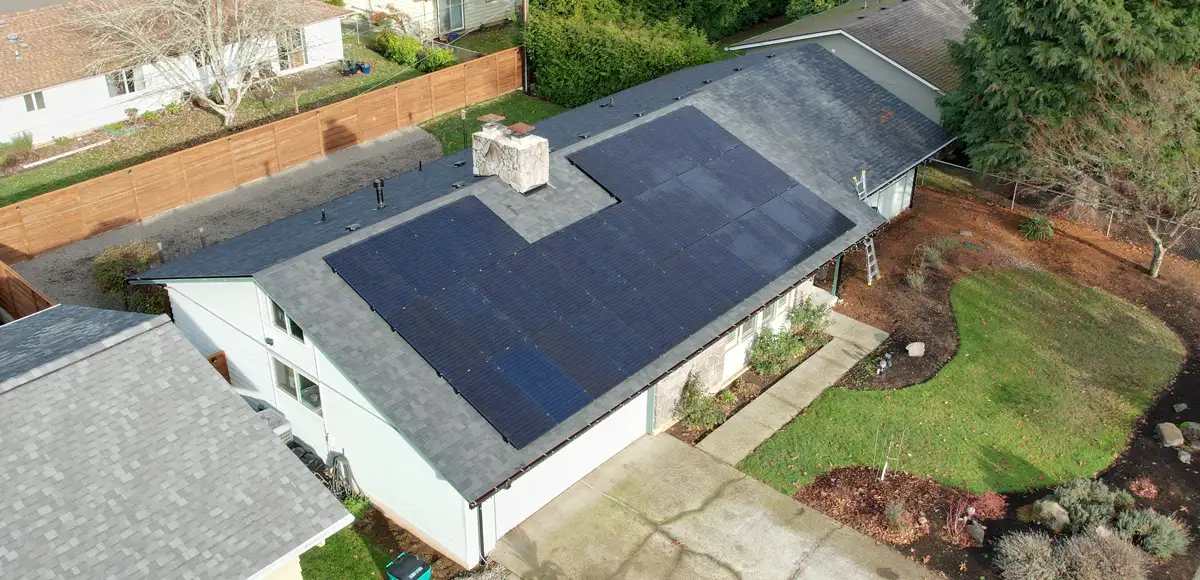
A solar array is a long-term investment, and like the roof it sits on, it performs best when someone checks it on a schedule instead of after the power bill looks wrong. Stanley Roof and Solar provides solar panel cleaning, maintenance, and repair for homeowners and businesses across Clark County and the wider Portland-Vancouver metro, backed by the same crew that handles roof replacement and roof maintenance on the building underneath.
That coordination matters more than it might seem. A solar-only maintenance company can clean your panels, but only a roofing and solar contractor can catch a developing roof issue while they’re already up there, before it becomes a bigger problem for the system it’s supporting.
Dirt and debris sitting on a solar panel block sunlight from reaching the cells, which lowers how much electricity the system produces. Research from the National Renewable Energy Laboratory (NREL) estimates a typical 5 percent loss in electricity output from panel soiling, with higher losses in dustier climates.
Vancouver isn’t a dusty climate, but it is a shaded, damp one, and the buildup that costs Pacific Northwest solar owners output is often moss, algae, pollen, and tree debris rather than dust. A panel shaded by a moss patch or a layer of fir needles loses output in that spot the same way a dusty panel does in a drier region, which is why regular cleaning matters here for a different reason than it does in the Southwest.
Cleaning is the visible part of solar maintenance, but a tune-up covers what’s happening beneath the glass. Stanley Roof and Solar checks the mounting hardware and racking for corrosion or loose fasteners, inspects wiring and connections for wear, and confirms the inverter is reporting the right numbers, since an inverter fault can cut a system’s output long before a homeowner notices a change in the power bill, with no visible warning sign.
A tune-up also compares the system’s actual output against what it should be producing for the season, which is the fastest way to catch a developing problem before it becomes a bigger repair. This kind of maintenance pairs well with the solar panel installation and broader solar services Stanley Roof and Solar already provides.
Not every solar problem is a cleaning or maintenance issue. Cracked glass, a failed connector, damaged wiring from a fallen branch, or a panel that has stopped producing power all call for repair rather than routine service. Because Stanley Roof and Solar is a roofing company first, a repair visit also checks whether the underlying roof, flashing, or mount points contributed to the damage, instead of treating the panel as an isolated problem.
For solar owners in Clark County, a well-maintained system isn’t just about the panels themselves, it’s about the credit on the power bill. Clark Public Utilities’ Solar Net Metering Program credits solar customers for the electricity their system sends back to the grid, which means a system losing output to dirt, moss, or a wiring fault is also losing the credit that output would have earned. Keeping the system clean and in good repair protects both the power it generates and the value of that net metering credit.
Every visit combines a few tasks that make the most sense to handle together, since our technicians are already on the roof.
Different seasons bring different priorities for solar system upkeep in this climate, most of all given how much rain, pollen, and debris the region cycles through year to year.
Season | Recommended Task | Why It Matters |
Spring | Clean pollen and winter debris buildup, check mounting hardware after winter storms | Heavy spring pollen and lingering winter debris both reduce panel output significantly |
Summer | Inspect for shading from new tree growth, confirm inverter output matches seasonal expectations | Longer daylight hours make summer the best window to catch underperformance against expected production |
Fall | Clear leaves and needles from panels and surrounding roof areas, inspect wiring before the rainy season | Prevents debris from trapping moisture against panels and roof penetrations through the wet months ahead |
Winter | Check for moss growth in shaded areas, confirm mounting points remain secure after wind events | Cold, damp conditions accelerate moss growth, and winter storms are this region’s most common source of mounting damage |
Pairing this seasonal rhythm with our roof maintenance schedule keeps both systems performing at their best throughout the year, rather than addressing each only when a problem becomes obvious.




A solar array rarely announces a problem the way a leaking roof does, so a gradual drop in output is easy to miss without paying attention. Here’s what to watch for if your system might be due for service.
Cost varies by system size, service type, and how much buildup has accumulated since the last cleaning. Here’s a general range to help set expectations before your free estimate.
Service | Typical Cost Range | What Affects the Price |
Standard Panel Cleaning | $150–$350 | System size, roof accessibility, buildup severity |
Annual Maintenance Visit (Inspection + Cleaning) | $200–$450 | System size, age, whether repairs are found |
Wiring and Connection Check | Often included with maintenance visit | Complexity of system, number of panels |
Inverter Inspection | $100–$250 | Inverter type, accessibility |
Mounting Hardware Repair | $150–$600 | Extent of damage, number of mounting points affected |
Combined Roof + Solar Maintenance Visit | Often discounted when bundled | System size, roof condition, scope of work |
These figures reflect typical scopes in the Vancouver and Portland metro and aren’t a substitute for an actual quote, since system size, accessibility, and current condition can all shift the final number. Stanley Roof and Solar provides a free estimate so you know exactly what your specific service will cost before any work begins.
Maintenance frequency depends on your system’s location, tree cover, and how much buildup accumulates between visits. Here’s a general guide for staying ahead of the issues most common in this climate.
Maintenance Task | Recommended Frequency | Why It Matters |
Standard Panel Cleaning | Once or twice a year | Removes moss, algae, pollen, and debris that reduce output |
Full System Tune-Up | Annually | Checks wiring, mounting hardware, and inverter performance together |
Inverter Function Check | Annually, or if output drops suddenly | Catches inverter issues before they cut production significantly |
Mounting Hardware Inspection | Every 1 to 2 years | Confirms clips and fasteners remain secure against wind exposure |
Wiring and Connection Check | Annually | Identifies wear or corrosion before it affects safety or output |
Systems Under Heavy Tree Cover | More frequent cleaning, every 4 to 6 months | Faster moss and debris buildup requires closer attention |
Post-Storm Check | After any significant windstorm | Confirms panels, mounts, and wiring weren’t damaged by wind or debris |
Pairing solar maintenance with your existing roof maintenance schedule is often the most efficient approach, since both systems can be inspected and serviced in the same visit.
Every maintenance visit follows the same clear process, whether it’s a standard cleaning or a full inspection paired with the roof underneath. Here’s what to expect from scheduling to the finished visit.
A solar system performs best when it’s maintained by a team that understands both the panels and the roof underneath them. Here’s what sets Stanley Roof and Solar apart for homeowners and businesses throughout the region.
Browse completed solar maintenance and panel cleaning projects in our project gallery to see the quality and craftsmanship we deliver across Vancouver, Clark County, and the Portland metro, and read what local homeowners and businesses say on our testimonials page or Google Business Profile.
No matter where a property sits within Southwest Washington or the greater Portland metro, Stanley Roof and Solar delivers the same thorough, Malarkey Premium Certified maintenance standard on every visit. From a routine cleaning in Vancouver to a full system tune-up in Portland, homeowners and businesses throughout the region get the same careful attention to both their solar system and the roof underneath it.
Our service areas include Vancouver, WA, Clark County, WA, Battle Ground, WA, Camas, WA, Longview, WA, Woodland, WA, Multnomah County, OR, Portland, OR, Beaverton, OR, Hillsboro, OR, Tigard, OR, and Lake Oswego, OR. For a full view of our coverage, see our service area page.
A drop in production is easy to miss until it shows up as a higher utility bill, and by then the fix is usually simpler than expected. Our team will clean your panels, check wiring and mounting hardware, and give you an honest report on how your system is performing, with no pressure to schedule more than what your system actually needs. Regular upkeep is one of the easiest ways to protect a long-term investment.
Call us at (800) 433-4633 to schedule your service today.
Whether you need a fast repair, a full roof replacement, or a solar system installed by a team that actually understands roofs, you’re one call away from a straight answer and a free estimate.
Solar maintenance covers panel cleaning, a system tune-up that checks wiring, mounting hardware, and the inverter, and panel repair, for both homes and businesses in Vancouver, WA and the Portland-Vancouver metro.
Most systems in the Vancouver and Portland metro benefit from cleaning once or twice a year, though properties under heavy tree cover may need more frequent visits due to moss and debris buildup.
Light cleaning from the ground is sometimes possible, but climbing onto a roof to clean panels carries real fall risk, and improper cleaning tools can scratch panels or damage seals.
Rain helps wash away light dust, but it doesn't remove moss, algae, or compacted debris, which are more common culprits in this region than the dust buildup seen in drier climates.
Output loss varies by buildup severity, but panels with significant moss or debris coverage can see a noticeable drop in production, particularly in shaded sections of the array.
Improper cleaning methods, like pressure washing or abrasive tools, can risk warranty issues. Stanley Roof and Solar uses methods that stay within manufacturer guidelines to protect existing coverage.
A sudden drop in output, rather than a gradual decline, often points to an inverter issue rather than dirty panels, since inverters typically have a shorter lifespan than the panels themselves.
Late summer or early fall works well, clearing pollen and debris buildup from spring and summer before the region's heaviest rain season begins.
Yes. Stanley Roof and Solar repairs cracked panels, damaged wiring, and connector issues, and checks whether the roof or mounting hardware contributed to the damage.
Yes. Stanley Roof and Solar offers financing for larger solar repair or tune-up projects so homeowners and businesses can spread the cost across monthly payments.
Whether you need a fast repair, a full roof replacement, or a solar system installed by a team that actually understands roofs, you’re one call away from a straight answer and a free estimate.