Solar Panel Installation in Vancouver, WA and the Portland Metro

Summary

Stanley Roof and Solar provides solar panel installation for homes and businesses throughout Vancouver, WA and the Portland metro, planning every system around the roof’s condition. As a Malarkey Premium Certified contractor, installations are backed by four-layer warranty coverage and available tax incentives.
Key Takeaways

  • Stanley Roof and Solar provides solar panel installation for residential and commercial properties throughout Vancouver, WA, Clark County, and the greater Portland metro.
  • Every installation starts with an assessment of roof condition, orientation, shading, and electrical panel capacity, since a roof with limited remaining life isn’t a good foundation for a system meant to last decades.
  • System components, including string inverters or microinverters, mounting hardware, and panel placement, are chosen based on each property’s specific site conditions, not a generic package.
  • Solar equipment warranty coverage stacks four layers: panel product, panel performance, inverter, and a workmanship warranty from Stanley Roof and Solar.
  • Federal, Washington, and Oregon solar tax credits and incentives can meaningfully reduce upfront installation costs.
  • Residential systems typically cost $15,000 to $30,000 before incentives, with financing available for qualifying projects.
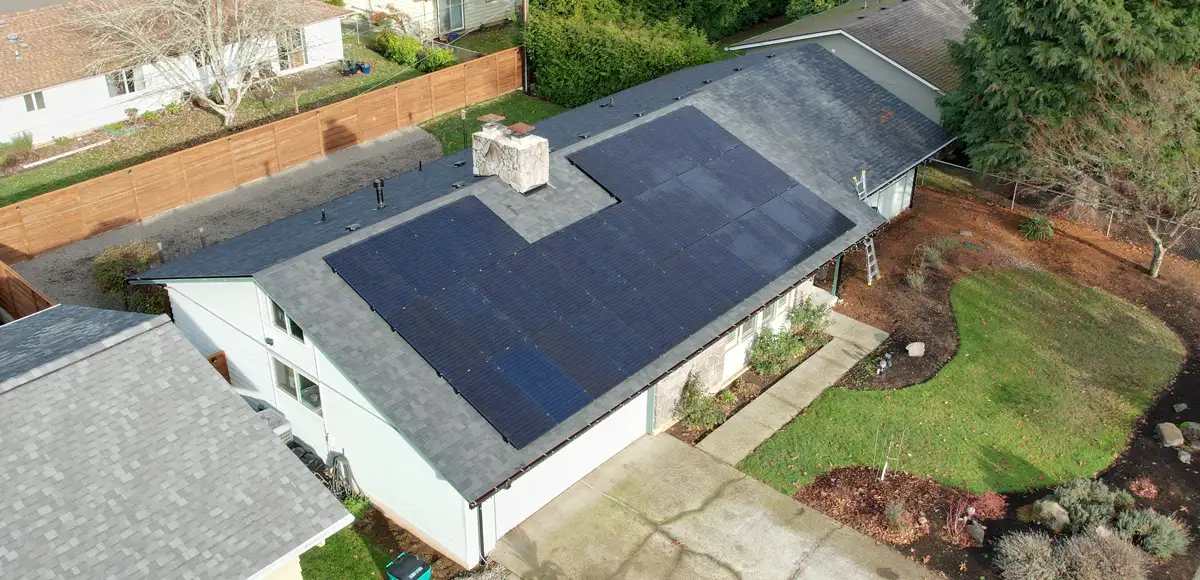
roof with solar panels

A solar panel installation is only as good as the roof underneath it, a detail many solar-only companies treat as someone else’s problem to worry about later. Stanley Roof and Solar designs and installs every system as a roofing company first, which changes how the array gets mounted, how penetration points get sealed, and how the whole project gets planned around the roof’s actual condition, not around it.

As a Malarkey Premium Certified contractor licensed in both Washington and Oregon, we start every installation with an honest look at what the roof underneath can actually support, then design a system sized to your real energy needs rather than a generic package. Explore what the process looks like below, or see our full range of solar services if you’re still comparing options.

Is Your Roof Ready for Solar Panels?

A few things determine whether a roof is ready for solar right now, or whether something else should happen first. According to the U.S. Department of Energy’s homeowner’s guide to solar, roof condition, orientation, and shading are among the first factors any homeowner should evaluate before moving forward with an installation.

  • Remaining roof life: A roof with only a few years of service life left is not worth mounting a system meant to last decades onto; pairing solar with a roof replacement solves this in one project instead of two.
  • Roof orientation and pitch: South and west-facing planes with a moderate pitch tend to produce the most, though most rooflines can support a workable system once modeled.
  • Shading: Trees or structures that shade a large part of the roof for much of the day take a real toll on production, and a site assessment accounts for this before anything is designed.
  • Electrical panel capacity: Some older electrical panels need an upgrade to handle a solar interconnection, which a site assessment identifies before installation day rather than after.
  • Current energy use: Higher electric bills tend to point to a larger potential offset, which is part of what sizing the system is built around.

A roof inspection combined with a solar site assessment answers all of this in one visit.

Choosing the Right Solar System Components for Your Home or Business

  • Inverter Type: String vs. Microinverters: A single string inverter serves the whole array and costs less, working well on roofs with consistent, unshaded sun exposure. Microinverters, attached to each panel individually, cost more but prevent one shaded or underperforming panel from dragging down the output of the entire array, which matters more on roofs with partial shade or a complex layout, common on larger commercial rooflines.
  • Mounting Hardware and Racking: The equipment anchored directly to the roof deck matters just as much as the panels or inverter, since it determines how securely the system holds up over decades of Pacific Northwest weather, whether on a residential rooftop or a larger commercial building.
  • Panel Count and Placement: Finalized during system design based on your specific site assessment, not a standard package applied to every roof regardless of size, shape, or whether it’s a home or business property.

Benefits of Installing Solar Panels in Vancouver, WA and the Portland Metro

Beyond the environmental appeal, solar offers real, measurable advantages for homeowners and businesses throughout the region. Here’s what makes it a worthwhile investment.

  • Lower Long-Term Energy Costs: Solar offsets grid electricity use, reducing monthly utility bills over the life of the system.
  • Protection Against Rising Utility Rates: A solar system locks in a significant portion of your energy production, insulating you from future rate increases.
  • Increased Home Appeal: Solar can be an attractive feature for buyers looking to lower future energy costs, particularly in a region where energy efficiency is increasingly valued.
  • Reduced Environmental Impact: Generating clean energy reduces reliance on grid power, supporting the broader sustainability goals many homeowners in this region prioritize.
  • Consistent Production Even in Cloudy Weather: Modern panels still generate meaningful power on overcast days, producing roughly 10 to 25 percent of rated output, according to the Solar Energy Industries Association, making solar a worthwhile investment even in the Pacific Northwest’s climate.
  • Available for Homes and Businesses: Commercial properties benefit from the same energy savings and sustainability advantages as residential installations, sized to actual load.
  • Pairs Naturally With a New Roof: Installing solar alongside a roof replacement means the system sits on a roof built to last as long as the panels do.

Solar Equipment Warranty Coverage: What’s Protected 

A solar installation is not covered by a single warranty; it is backed by several layers stacked on top of each other, and understanding what each one covers matters before signing a contract. The table below breaks down each layer and what it protects.

Coverage

What It Covers

Typically Backed By

Panel product warranty

Manufacturing defects in the panel itself

Panel manufacturer

Panel performance warranty

Guarantees panels still produce close to rated output after years of sun exposure

Panel manufacturer

Inverter warranty

Defects in the inverter, which has more moving parts and a shorter typical lifespan than the panels

Inverter manufacturer

Workmanship warranty

Installation errors, including mounting, wiring, and roof penetration seals

Stanley Roof and Solar

Full detail on how solar warranty coverage works alongside roofing warranty coverage is on the Warranty page.

Solar Tax Credits and Incentives in Washington and Oregon

Solar installation costs before incentives don’t tell the whole story. Both Washington and Oregon offer programs that can meaningfully reduce the upfront cost of a system, on top of the federal solar tax credit available to most homeowners. According to ENERGY STAR, the federal Residential Clean Energy Credit currently allows homeowners to claim a percentage of their solar installation cost against their federal taxes. For a full breakdown of what’s available specific to this region, see our guide to solar tax credits in Oregon and Washington.

What Affects the Cost of Solar Panel Installation

A solar estimate is never a flat number, and several factors move it in either direction.

  • System size: More panels and higher output cost more upfront, though the right size depends on actual energy use, not the biggest system that fits on the roof.
  • Roof condition: A roof needing repair or replacement before installation adds that cost to the overall project, though pairing the two is often more efficient than doing them as separate jobs.
  • Inverter type: Microinverters cost more than a single string inverter in most cases, offset by better performance on a shaded or complex roof.
  • Electrical panel upgrades: Some properties need an electrical panel upgrade to handle the interconnection, which adds to the project scope.
  • Roof complexity: Multiple roof planes, dormers, or obstructions add mounting complexity compared to a simple, open roof.

Financing is available to spread the cost over time rather than paying the full amount upfront.

Our Solar Panel Installation Process

Every solar project follows the same clear steps, so there’s no guesswork about what happens next.

  1. Site assessment and consultation: A technician evaluates your roof’s condition, orientation, shading, and your current energy use to determine if your property is solar-ready.
  2. System design: Panel count, placement, and inverter type are finalized based on your specific site, not a generic package.
  3. Written estimate: You receive a clear, itemized estimate with financing options explained, no pressure to decide on the spot.
  4. Permitting and utility coordination: Stanley Roof and Solar handles the permitting and utility interconnection paperwork required before installation.
  5. Installation: Panels, racking, and inverter are installed with the same attention to roof penetration points as any other roofing work.
  6. Inspection and activation: A final inspection and utility sign-off activate the system, and you’re walked through your warranty coverage.

Why Homeowners and Businesses Choose Stanley Roof and Solar

Solar is a decades-long investment, and who installs it matters just as much as the equipment itself. Here’s what sets Stanley Roof and Solar apart for homeowners and businesses throughout the region.

  • Licensed in Washington and Oregon: Fully licensed, bonded, and insured to serve Clark County, Vancouver, and communities across the Portland metro.
  • Roofing Company First, Solar Installer Second: Every system is designed and mounted by a team that understands the roof underneath it, not a solar-only crew working around someone else’s roofing work.
  • Malarkey Premium Certified Contractor: The highest certification tier Malarkey Roofing Systems offers, held by only a small number of contractors in the region.
  • Honest Roof Assessment Before Installation: We evaluate your roof’s remaining life first, so panels aren’t mounted on a system that will need replacement in a few years.
  • Systems Sized to Real Energy Use: No generic packages, every design is based on your actual household or business electricity consumption.
  • Three-Layer Warranty Protection: Panel, performance, and workmanship coverage, explained clearly before installation begins.
  • Residential and Commercial Experience: Systems scaled to fit both homes and business properties throughout the region.
  • Flexible Financing Available: Payment options that make solar more accessible; explore plans on the Financing page.

You can see our recent solar work in the project gallery and read real reviews on our testimonials page and Google Business Profile to see why homeowners and businesses trust Stanley Roof and Solar for their solar needs.

Proudly Serving the Portland-Vancouver Metro Area with Professional Solar Panel Installation Services

No matter where a property sits within Southwest Washington or the greater Portland metro, Stanley Roof and Solar delivers the same Malarkey Premium Certified approach to every solar panel installation, planned in coordination with the roof underneath it. From a residential system in Vancouver to a commercial installation in Portland, homeowners and businesses throughout the region get the same honest, no-pressure process on every job.

Our service areas include Vancouver, WA, Clark County, WA, Battle Ground, WA, Camas, WA, Longview, WA, Woodland, WA, Multnomah County, OR, Portland, OR, Beaverton, OR, Hillsboro, OR, Tigard, OR, and Lake Oswego, OR. For a full view of our coverage, see our service area page. 

Schedule Your Free Solar Panel Installation Estimate in Vancouver, WA and the Portland Metro Today

The best time to start planning a solar system is before you need one, not after utility rates climb again. Our team will assess your roof, model your home’s production potential, and walk you through system options built around your actual energy use, all with a clear estimate and zero pressure to commit on the spot. Every year you wait is another year of paying full price for grid electricity instead of generating your own. 

Call us at (800) 433-4633 to schedule your free consultation today.

Get in Touch With Our Roofing Experts Today

Whether you need a fast repair, a full roof replacement, or a solar system installed by a team that actually understands roofs, you’re one call away from a straight answer and a free estimate.

Frequently Asked Questions

The physical installation takes one to a few days in most cases, though permitting and utility interconnection approval, which are outside the installer's control, often take longer than the install itself.

Most residential systems need between 300 and 600 square feet of usable roof space, though the exact amount depends on your energy needs and the panel efficiency chosen for your system. A site assessment gives you an exact figure based on your roof's actual dimensions and layout.

Some older homes require an electrical panel upgrade to safely handle a solar system. Stanley Roof and Solar evaluates your existing panel during the site assessment to confirm what's needed before installation.

It can, if the installer isn't also the roofing contractor. Because Stanley Roof and Solar handles both trades, solar mounting is planned specifically to protect your existing roof warranty coverage.

Residential solar systems in this region typically run between $15,000 and $30,000 before incentives, depending on system size, panel type, and roof complexity. Stanley Roof and Solar provides a free, detailed consultation to give homeowners an accurate estimate specific to their property and energy needs.

A string inverter serves the whole array from one unit and costs less, while microinverters attach to each panel on its own and keep one shaded or underperforming panel from dragging down the rest of the system's output.

Coverage is layered across the panel product warranty, panel performance warranty, inverter warranty, and a workmanship warranty from Stanley Roof and Solar. Full details are on the Warranty page.

Yes, most solar installations require permitting and utility interconnection approval. Stanley Roof and Solar handles this paperwork directly as part of the project, so homeowners don't have to navigate it alone.

Damaged panels are typically covered under the manufacturer's product warranty, and Stanley Roof and Solar's workmanship warranty covers any issues related to the original installation itself.

Get a Free Quote
Get in Touch With Our Roofing Experts Today

Whether you need a fast repair, a full roof replacement, or a solar system installed by a team that actually understands roofs, you’re one call away from a straight answer and a free estimate.