

Summary
Choosing between asphalt shingles and standing seam metal roofing in the Pacific Northwest comes down to budget and timeline. Asphalt costs less upfront; metal lasts longer and pairs better with solar. Stanley Roof and Solar installs both as a Malarkey Premium Certified contractor.
Key Takeaways
- Asphalt shingle roofing costs less upfront ($8,000 to $15,000 typical) and lasts 20 to 30 years, making it the practical choice for shorter ownership timelines or tighter budgets.
- Standing seam metal roofing costs more upfront ($15,000 to $30,000+) but lasts 40 to 70 years, with stronger moss resistance and better wind performance.
- Stanley Roof and Solar installs both materials as a Malarkey Premium Certified Contractor, so the recommendation is based on your roof, not which material carries the bigger margin.
- Metal roofing is a stronger substrate for solar panel installation, since standing seam panels allow non-penetrating mounting clamps.
- Both materials carry a Class A fire rating and hold up well against the Pacific Northwest’s rain, wind, and moss-prone climate when properly installed.
- The right material depends on ownership timeline, budget, shading, and whether solar is part of future plans.
If you are planning a roof replacement in Vancouver, Portland, or anywhere across Southwest Washington and the Willamette Valley, the material decision comes down to two options in most cases: asphalt shingles or metal roofing. Both perform well in our region with a correct install, but the right choice depends on your budget, how long you plan to own the home, and how much upfront cost you are willing to carry for long-term savings.
At Stanley Roof and Solar, we install both asphalt shingle roofing and metal roofing for homeowners across Vancouver, WA and the greater Portland metro, so this comparison is built from what we see on real roofs in this climate, not generic national averages. Here is how the two systems stack up.
Why the Pacific Northwest Climate Matters for Roof Material
Western Washington and Oregon are not the hardest climate in the country for a roof, but they are a demanding one in a specific way: sustained, low-intensity rain for months at a time, combined with moss- and moisture-friendly shade from our conifer tree cover, occasional wind events off the Columbia River Gorge, and only rare hail or freeze-thaw cycling compared to the Midwest or Rockies. According to the National Weather Service, the Portland-Vancouver metro averages about 36 to 43 inches of rain a year, most of it concentrated between October and May.
That combination changes what “durable” means here. A roof material that survives Arizona sun or Minnesota hail is not always the right fit for a roof that spends half the year damp. In the Pacific Northwest, drainage, moisture resistance, and moss/algae resistance matter as much as raw material strength.
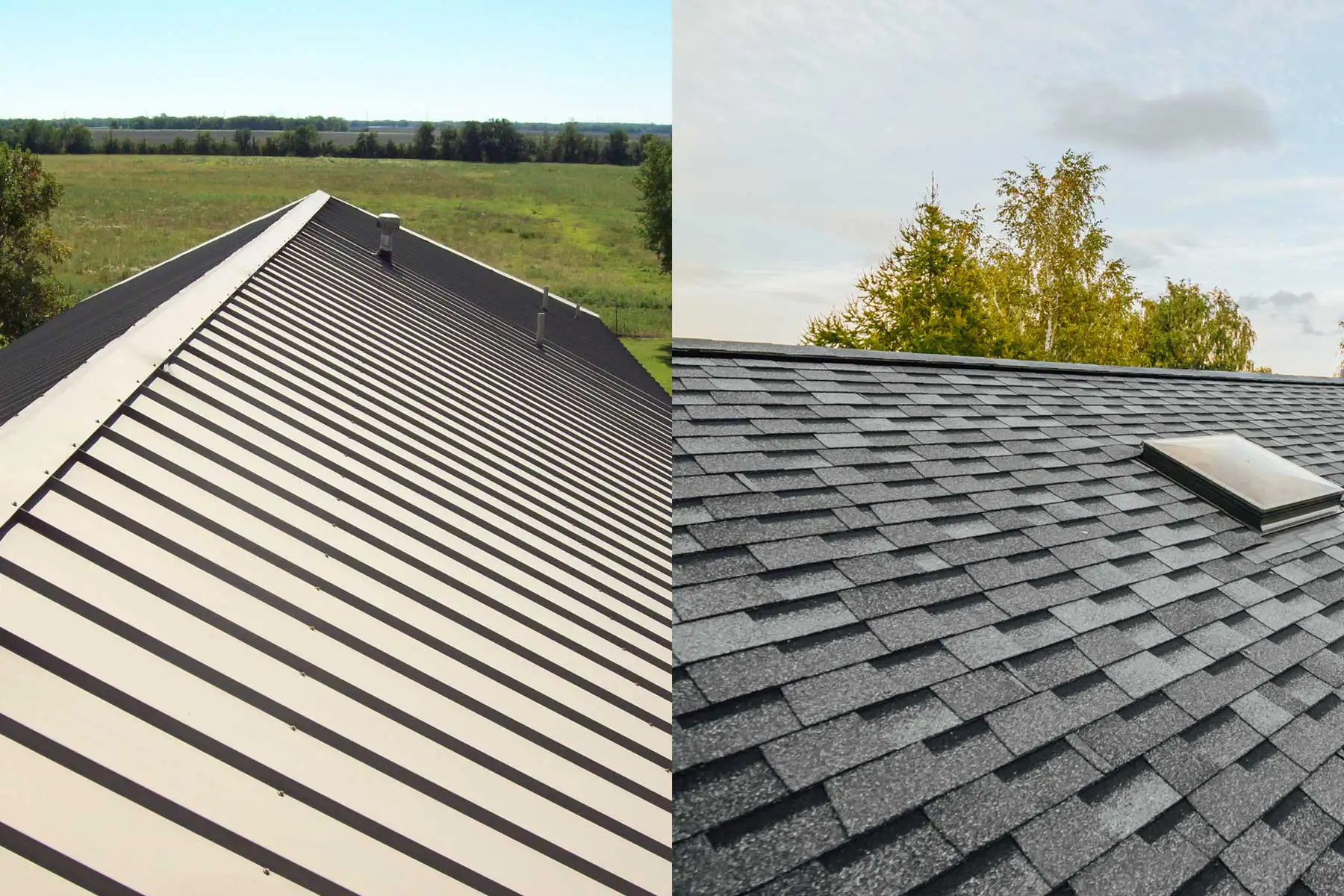
At a Glance: Asphalt Shingles vs. Standing Seam Metal
Before diving into the details, here’s a side-by-side snapshot of how the two materials compare on the factors that matter most in our climate. Use this as a quick reference, then read on for the full breakdown of each.
| Feature | Asphalt Shingles | Standing Seam Metal |
| Upfront Cost | $8,000–$15,000 typical | $15,000–$30,000+ typical |
| Expected Lifespan | 20–30 years | 40–70 years |
| Moss & Algae Resistance | Moderate, needs regular treatment | Strong, sheds moisture and resists growth |
| Wind Performance | Good with proper sealing | Excellent, concealed clip system |
| Maintenance | Periodic moss treatment and gutter checks | Minimal, mostly debris clearing |
| Solar Compatibility | Requires roof penetrations for mounting | Excellent, non-penetrating mounting clamps |
| Best For | Shorter ownership timelines, budget-conscious homeowners | Long-term ownership, pairing with solar, low-maintenance preference |
Asphalt Shingle Roofing: Strengths and Trade-Offs
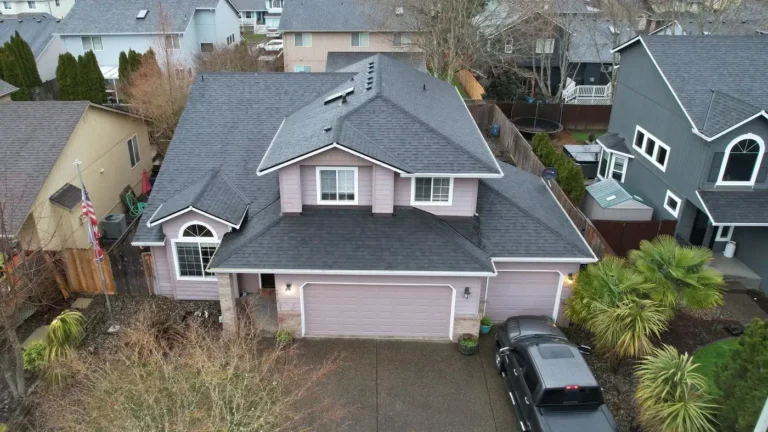
Asphalt shingles remain the most common roofing material in our service area, and for good reason. We install Malarkey Roofing Systems shingles, a manufacturer based right here in the Pacific Northwest and built for our wet climate. Stanley holds Malarkey’s highest certification level, a distinction only a small number of contractors in the region carry.
Where Asphalt Shingles Perform Well:
- Lower upfront material and labor cost than metal, which keeps a full roof replacement accessible for more homeowners
- A wide range of colors and profiles, including architectural shingles that mimic the look of slate or shake
- Straightforward, well-understood repairs if a section of the roof is damaged by a fallen branch or storm debris
- Algae-resistant granule technology on modern shingle lines, which helps in a climate prone to moss and moisture staining
- A proven track record on steep and moderate roof pitches common in Vancouver and Portland neighborhoods
Where Asphalt Shingles Fall Short:
- A shorter service life than metal, in the 20- to 30-year range on average, depending on the product line and installation quality
- More vulnerable to moss growth in shaded, north-facing sections of the roof without regular upkeep
- Individual shingles can lift or crack in sustained high wind if not sealed with care during install
If your budget is the primary driver, or you want a material with an established repair and insurance history, asphalt is often the practical choice. Our team can walk you through which Malarkey shingle line fits your home and budget.
Metal Roofing: Strengths and Trade-Offs
When homeowners ask us about metal roofing, they are almost always asking about standing seam metal, which is the system we install. Standing seam panels are continuous, interlocking metal sheets fastened with concealed clips, a different (and more durable) system than the shorter, exposed-fastener “click-lock” metal panels sold at big-box retailers.
Where Standing Seam Metal Roofing Performs Well:
- A much longer service life than asphalt, often 40 to 70 years, according to the Metal Roofing Alliance, well beyond a typical asphalt shingle system.
- Excellent shedding of heavy, sustained rain thanks to the continuous panel design and concealed fasteners, which reduces the leak points common to shingle roofs over time
- Strong resistance to moss and algae growth compared to asphalt, since there are far fewer horizontal surfaces for organic buildup to take hold
- Better performance in wind events, since standing seam panels lock together with concealed clips rather than rely on adhesive seals
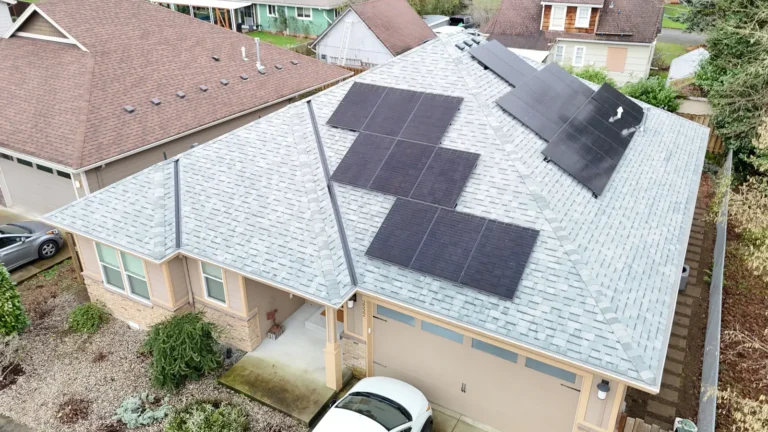
- A better substrate for solar panel installation, since standing seam panels allow non-penetrating mounting clamps that do not compromise the roof’s weatherproofing
Where Metal Roofing Costs More Upfront:
- Higher material and labor cost than asphalt, often two to three times the price of a comparable shingle roof
- Fewer color and profile options if you want the exact look of a traditional shingle roof
- Requires an experienced installer familiar with standing seam detailing around valleys, flashing, and penetrations, since a metal roof that is not installed with care underperforms its own material
For homeowners planning to stay in their home for decades, or who are pairing the roof replacement with a future or current solar panel installation, standing seam metal often pencils out over the life of the roof even with the higher initial cost.
Cost Comparison: What to Expect
Exact pricing depends on your roof’s size, pitch, tear-off scope, and any decking repair needed, so we always recommend a free, no-pressure on-site estimate rather than a national average calculator. As a general range, most asphalt shingle roof replacements in the Vancouver and Portland metro run between $8,000 and $15,000, while standing seam metal roofing typically runs $15,000 to $30,000 or more, depending on the size and complexity of the roof.
Asphalt shingle carries the lower installed cost, while metal carries a higher upfront investment but a longer lifespan and lower long-term maintenance need. When you divide total cost by expected years of service, the gap between the two materials narrows by a wide margin.
Stanley Roof and Solar offers flexible financing options for both material types, so the higher upfront cost of metal doesn’t have to be a barrier if it’s the better long-term fit for your home.
Lifespan, Maintenance, and Warranty
Beyond the sticker price, ask how each material holds up over time in our specific climate:
- Asphalt shingles need periodic roof maintenance, including moss treatment and gutter checks, to reach the upper end of their expected lifespan.
- Standing seam metal needs very little maintenance beyond periodic roof inspections and clearing debris from valleys.
- Both materials come with manufacturer and workmanship coverage through Stanley. Review our roofing and solar warranty page for the specifics on what is covered for each system.
Well-installed gutters are a factor for either material choice, since standing water and poor drainage shorten the life of any roof in a climate as wet as ours.
Environmental Impact and Recyclability
For homeowners weighing sustainability alongside performance, metal roofing has a clear edge: it’s highly recyclable at the end of its service life and often contains a meaningful percentage of recycled content already.
Malarkey’s asphalt shingle lines, which Stanley Roof and Solar installs as a Certified Premium contractor, are also manufactured with recycled materials and engineered for durability in wet climates, narrowing the sustainability gap between the two options. Homeowners specifically prioritizing eco-conscious roofing can also explore our eco / sustainable roofing options for either material type.
Weight and Structural Considerations
Asphalt shingles are heavier per square foot than standing seam metal, which matters most on older homes where the original framing was sized for a specific roofing load. According to the National Roofing Contractors Association, roof weight and structural load capacity are important considerations any homeowner should discuss with their contractor before choosing a replacement material, particularly on older homes.
Metal roofing’s lighter weight can be an advantage on older structures, additions, or homes where a structural engineer has flagged load concerns, since it reduces stress on the roof deck and framing compared to a shingle tear-off and reroof. This isn’t a deciding factor for most homes in our service area, but it’s worth raising during your inspection if your property is older or has had prior structural work.
Fire Resistance
Both materials carry strong fire ratings when installed correctly. Asphalt shingles typically carry a Class A fire rating, the highest classification available, when installed with compatible underlayment. Metal roofing is inherently non-combustible and also achieves a Class A rating.
While wildfire risk is less of a daily concern in the wetter parts of the Portland-Vancouver metro compared to drier regions of the state, homeowners closer to wooded or rural areas of Clark County increasingly factor fire rating into their material decision, and both options perform well on this measure.
Resale Value: Does Roofing Material Affect Home Value?
Both materials can support a strong resale outcome, but they do it differently. A newer asphalt shingle roof signals to buyers that they won’t face a major expense right after closing, which tends to matter most in a typical home sale.
Standing seam metal roofing goes a step further for buyers who research long-term ownership costs, since a 40- to 70-year lifespan means the roof likely outlasts their time in the home entirely, a genuine selling point in listings that call it out. Neither material guarantees a higher appraisal on its own, but a documented, professionally installed roof of either type, especially one backed by a transferable warranty, removes a common objection during negotiations.
Which Material Is Right for Your Home?
There is no single right answer, but a few questions tend to point homeowners in one direction or the other:
- How long do you plan to stay in the home: A shorter hold favors asphalt’s lower upfront cost. A long-term hold favors metal’s lifespan advantage.
- Are you planning solar: If solar panel installation is on your radar, standing seam metal is a natural fit for non-penetrating mounting hardware.
- How shaded is your roof: Roof sections under heavy shade and moss pressure benefit from metal’s smoother, harder-to-colonize surface.
- What is your budget for this project: If cash flow is the deciding factor, asphalt shingles deliver strong performance at a lower entry point, a good fit when paired with financing.
- What does your neighborhood or HOA expect: Some Vancouver and Portland neighborhoods have architectural guidelines that favor one material’s appearance over the other.
Either way, both systems are proven performers in this climate when installed by a contractor who understands Pacific Northwest weather patterns and flashing details.
Why Homeowners Choose Stanley Roof and Solar for Asphalt Shingles or Metal Roofing
Whichever material ends up being the right fit, the contractor installing it matters just as much as the shingles or panels themselves. Here’s what sets Stanley Roof and Solar apart for homeowners throughout the region.
- Malarkey Premium Certified Contractor: The highest certification tier Malarkey Roofing Systems offers, unlocking enhanced warranty coverage on qualifying shingle systems.
- Honest Material Recommendations: Every suggestion is based on your roof, budget, and long-term plans, not which material carries the bigger margin.
- Built for Pacific Northwest Weather: Every installation, shingle or metal, is designed to handle this region’s rain, wind, and moss growth specifically.
- Licensed in Washington and Oregon: Fully licensed, bonded, and insured to serve Vancouver, Clark County, and the greater Portland metro.
- Strong Warranty Coverage: Every project is backed by manufacturer and workmanship protection; see full details on the Warranty page.
- Flexible Financing Available: Payment options that make either material more accessible; explore plans on the Financing page.
- Free, No-Pressure Estimates: A personalized comparison for your specific roof, not a generic calculator or sales pitch.
You can see examples of both asphalt and standing seam metal installations in our project gallery, and hear from past clients on our testimonials page or Google Business Profile.
Get a Free, No-Pressure Roofing Estimate Today
Whether you are leaning toward asphalt shingles, standing seam metal, or still weighing both, the team at Stanley Roof and Solar can walk your roof, answer your questions, and give you a straightforward estimate with no sales pressure. Serving Vancouver, WA, Portland, OR, and the surrounding communities, we are ready to help you choose the roofing material that fits your home, your budget, and our Pacific Northwest weather.
Contact us today to schedule your free estimate, or browse our full roofing services to learn more about what we offer.
Stanley Roof and Solar
Address: 7202 NE Hwy 99 Ste 106-210, Vancouver, WA 98665, United States
Phone Number: (800) 433-4633
Google Maps: Find Us Here
Email: info@stanleyroofandsolar.com
Business Hours:
Monday: Open 24 hours
Tuesday: Open 24 hours
Wednesday: Open 24 hours
Thursday: Open 24 hours
Friday: Open 24 hours
Saturday: Open 24 hours
Sunday: Open 24 hours
FAQs About Asphalt Shingles vs. Metal Roofing
Which lasts longer, asphalt shingles or metal roofing?
Standing seam metal roofing lasts about 40 to 70 years on average, compared to 20 to 30 years for asphalt shingles. The exact lifespan for either material depends on the product quality, installation, and how well the roof is maintained over time.
Is metal roofing worth the extra cost in Vancouver, WA & the Portland Metro?
For homeowners planning to stay in their home long term, or who want to pair the roof with a solar installation, metal roofing often delivers a better cost-per-year of service despite the higher upfront price. For a shorter hold period, asphalt shingles offer the better return in most cases.
Does metal roofing make more noise in the rain?
Modern standing seam metal roofing is installed over solid decking and underlayment, the same base a shingle roof uses, so the drumming sound associated with older barn-style metal roofs is not a factor. Homeowners notice little to no difference in rain noise between a well-installed metal roof and an asphalt roof.
Can asphalt shingles or metal roofing be installed over an existing roof?
In some cases, asphalt shingles can be installed over one existing layer, though a full tear-off is often the better long-term choice. Standing seam metal roofing generally requires a full tear-off to bare decking to ensure proper fit and performance.
Do I need a different roofer for metal versus asphalt shingles?
Not with Stanley Roof and Solar. We install both asphalt shingle systems through our Malarkey Premium certification and standing seam metal roofing, so you get the same crew, warranty backing, and no-pressure guidance regardless of which material fits your home.
Will my homeowner’s insurance rates differ based on roofing material?
Some insurers offer discounts for impact-resistant or fire-resistant materials, and metal roofing sometimes qualifies for lower premiums in certain markets. It’s worth checking directly with your insurance provider, since policies and discounts vary by company.
Which material resists moss better in a wet climate like Vancouver, WA?
Standing seam metal roofing resists moss growth more effectively than asphalt shingles, since its smooth, sloped surface sheds moisture faster and gives moss less to grip onto. Asphalt shingles can still perform well with regular maintenance, but they require more consistent moss treatment to stay ahead of growth in this climate.
Can I get solar panels installed on either roof type?
Yes. We install solar panels on both asphalt and metal roofs. Standing seam metal has an advantage here because it allows non-penetrating mounting clamps, while asphalt roofs require careful flashing at each penetration point, which our crews handle as part of a coordinated roof-and-solar project.